
Three pawns on f7, g7 and h7, a king on g8, and a rook lands on e8. Nothing else needed, and it has ended more won games than any opening trap.

 7
7 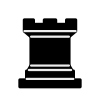
 2
2 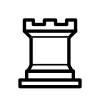 e
e  g
g Luft is the German word for air, and in chess it means exactly that: a hole for the king to breathe through. You make it by pushing the h-pawn one square, h3 as White or h6 as Black, so that a check on the back rank can be answered by walking up to h7 instead of by losing.
One pawn move and the mate is gone
6 2 e g Same rook, same file, same king. One pawn on h6 rather than h7, and the mate has turned into a check that Black answers with a shrug. That is the entire value of the move, and it costs a single tempo in a quiet position.
I make it a habit with my students: once the queens are off and you have rooks left, look at your own back rank and ask whether a rook could ever get there with check. If yes, and you have nothing better to do this move, play h3.
When not to spend the move
Not while there is a threat on the board. If his rook is already on the seventh or his knight is coming to g5, you have real problems to solve first, and h3 in that moment can be the move that loses.
Not in the opening, either. On move six, h3 usually has a job of its own (stopping a bishop from pinning your knight on f3) and back-rank mate is thirty moves away. Save it for the middlegame, roughly when you would start thinking about which rook goes where.
And keep the alternative in mind. If you have a rook or a queen guarding your own back rank, you do not need luft at all, because the checking piece can simply be taken. It is only when your last defender leaves that the hole opens, which is why so many back-rank disasters happen on the move a rook goes hunting.
The whole family of accidents is worth drilling until you see it without thinking: back rank mate puzzles will do that in an evening. And the habit behind luft, spotting the idea before it happens and spending a move to kill it, has its own name: prophylaxis.