
White plays 1.exd5 and the black pawn goes in the box. The white pawn leaves e4, lands on d5, and the piece that was standing there is off the board for the rest of the game. That is the whole mechanism. You capture by occupying the square, not by jumping the piece the way you do in draughts, and your man finishes the move standing exactly where the enemy man stood.



 a
a  e
e Five things that hold for every capture
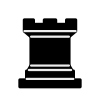
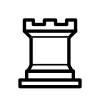
- You have to reach the square legally. The rook on a1 above would love the rook on a7, but the pawn on a3 is in the way, and the knight is the only piece allowed over other men.
- One capture per move. A bishop that takes on d5 stops on d5, even with a loose queen sitting on e6 one square further along the diagonal.
- You can never capture your own piece. If your knight and your bishop both want e5 and your own pawn is standing there, neither of them gets it.
- The king captures like anything else, as long as the square it lands on is undefended. A king on f1 will happily take a rook on g2. If that rook is protected, the capture is not merely unwise, it is illegal.
- Taking is optional. Draughts forces you to capture. Chess never does, and plenty of strong moves consist of ignoring the piece on offer.
The pawn is the odd one out
Every other piece captures the way it moves. The pawn does not. It goes straight forward one square (two from its starting rank) and it takes one square diagonally forward, which is why the pawn on e4 in the diagram attacks d5 and f5 and is powerless against the pawn right under its nose on e5. Two pawns facing each other like that are frozen until something else arrives. Whole opening structures are built on that fact, and the details are on how pawns capture.
The capture that lands on an empty square
Exactly one capture in the Laws breaks the land-on-the-piece rule. Say your pawn is on e5 and your opponent’s d-pawn tries to slip past it with the two-square jump d7-d5. You may answer exd6: your pawn goes to d6, and the black pawn on d5 comes off the board even though nothing ever stood on d6. It is legal only on the move straight after the jump, and never again. Read what en passant is, because half the arguments I have had to settle at junior events are about this one move.
Where the games are actually decided
Most beginner games end because of a capture nobody planned. A piece gets left where it can be taken for nothing, the opponent spots it, and the contest is over. So the first habit worth building is a dull one: every time your opponent moves, look at your pieces that nothing is defending, then look at theirs. Undefended pieces are called hanging, and hanging piece puzzles are the cheapest rating points on offer. If you are the one handing them over, how to stop blundering is the page to read next.
Written down, a capture takes an x: exd5, Nxe5, Qxf7. That letter is all the notation adds, and what x means covers the rest of the symbols you will meet.